
Construction
Where Construction Debris Actually Goes Around Johnstown
No curbside system in this valley takes construction debris — not the City, not the townships. Here is where it actually goes and how to pay less for it.
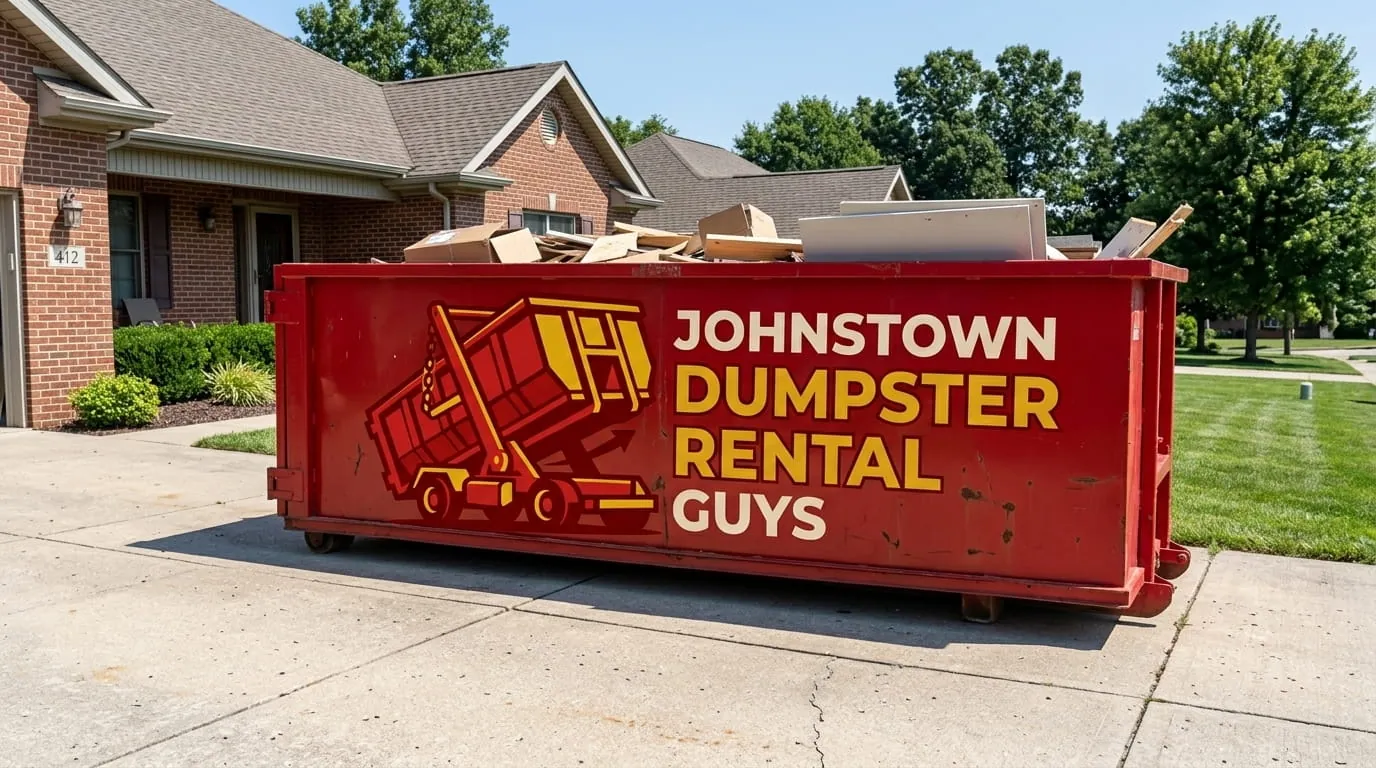
No curbside system takes it
Every market has a line where municipal collection stops and a container starts. In this valley the line is unusually clear, because none of the systems around here are designed to take building material at all.
The City allows one bulk item a month, arranged by phone, and anything that is not household trash has to be arranged separately with the hauler before you dispose of it. The surrounding townships run cart-based collection where everything must fit inside the cart provided. Neither shape accommodates a renovation.
The City side: one item, by phone
Worth being precise, because the allowance is genuinely tight.
One bulk item per month is collected at no extra charge, and you must call the office first to have it picked up. For extra items that are not considered household trash, the instruction is to contact the hauler and make arrangements before disposing of them.
That is a reasonable service for replacing a mattress. For a project generating debris daily it is not a route, and the City is not pretending otherwise — the arrangement exists precisely so that renovation material goes through a private hauler.
The township side: it must fit the cart
Outside the city line the constraint is different but no looser.
Upper Yoder Township, as a representative example, requires that all trash and recycling fit into the carts provided. Small loose items dumped on the ground are left at the curb. Everything must be boxed, bagged, bundled or containerized. Extra capacity is an additional cart at an annual charge — not something you add for one job.
Each borough and township sets its own arrangement, so check yours. But a cart-based system with an annual subscription for extra capacity is simply not a mechanism for disposing of a kitchen.
Why stream separation saves money
Disposal is priced per ton and the rate varies by stream. Mixed C&D is the most expensive. Clean inert material — concrete, brick, stone — is cheaper. Scrap metal has positive value.
Consider a renovation producing six tons of plaster and general debris, four tons of clean concrete from a porch slab, and a pile of scrap metal and cardboard. All in one container and you pay the mixed rate on everything. Split it and the concrete moves to a cheaper route while the metal and cardboard go to routes that cost nothing.
The City maintains a list of businesses that recycle appliances, scrap metals and aluminium, and the County has drop-off containers for corrugated cardboard. Neither costs you disposal.
The five streams worth separating
1. Clean concrete, block, brick and stone
Rebar is generally fine. Timber, plastic sheeting and general debris are not. Goes in a 10 yard because of weight, always.
2. Scrap metal
Copper pipe, steel studs, ductwork, conduit, railings and appliances. It has positive value and the City keeps a list of businesses that take it.
3. Cardboard and packaging
New construction generates an extraordinary amount, and it goes to the County drop-off containers rather than into your paid tonnage.
4. Electronics
Not optional and not a preference: Pennsylvania's Covered Device Recycling Act means haulers cannot accept televisions, computers and monitors, and they are banned from landfills. On a commercial fit-out or an office clear-out this is a real planning item, not an afterthought.
5. Clean dimensional lumber
Untreated, unpainted, fasteners removed where practical. Treated timber does not qualify, which matters because deck and fence timber nearly always is.
Plaster and coal-era material
Worth its own section because it is the most common sizing error on older-house work here, and this valley has a great deal of older housing.
Pre-1950 building across the city, the valley boroughs, Westmont and Windber is plaster on wood lath, not drywall. Plaster is dramatically heavier — a room that would be a comfortable half-container of drywall debris can be at its weight allowance in plaster alone.
Company-built coal and steel era housing adds more: real dimensional lumber cut heavier than anything milled today, stone foundations, and often a coal cellar underneath. Clearing one of those out produces substantially more than the floor area suggests, and every bit of it comes up a set of stairs.
The practical consequence: on an older-house gut, size down and swap more often rather than filling one big container you cannot legally haul.
Asbestos and pre-1980 buildings
This region has a very high proportion of pre-1980 housing and genuinely old industrial fabric. Floor tile and its mastic, pipe lagging on old boiler and steam runs, and textured coatings are the usual culprits — and old lagging in particular is common in houses that once had coal-fired central heating.
Anything from before roughly 1980 should be treated as asbestos-suspect until surveyed. Abatement is licensed work with its own disposal route and it never goes in a roll-off container. Get the survey done before demolition starts rather than halfway through a strip-out.
Practical site setup on a tight lot
Standard advice applies, with two local additions.
- Place containers where the work is, not where they are convenient for the truck. Labour spent walking debris across a site is the largest hidden cost in waste handling.
- On a tight valley lot, plan the swap sequence first. If there is only one workable placement, you cannot have two containers at once — so the job has to be phased around swaps rather than run in parallel. Tell us the programme and we will schedule it.
- Check the overhead before the trades arrive. Twenty-two feet of clear height is what the truck needs, and on tree-lined borough streets that is the binding constraint.
- Label the containers. A sheet of plywood marked CLEAN CONCRETE ONLY protects the cheaper route.
- Book swaps into the programme, not on the day you notice the can is full.
- Cover it in winter. A frozen load will not tip and the container comes back still full.
- Watch the spring thaw. When the frost comes out, a site route that carried loaded trucks all winter will not carry them in April.
We are happy to help set that up — tell us the build programme and we will schedule around the trade sequence.
Need a container in Johnstown?
Call and describe the job. Three minutes on the phone gets you a size recommendation, a flat rate and a delivery window — and we will tell you if a smaller, cheaper container is the right answer.
Call (814) 999-8622